SKULL145

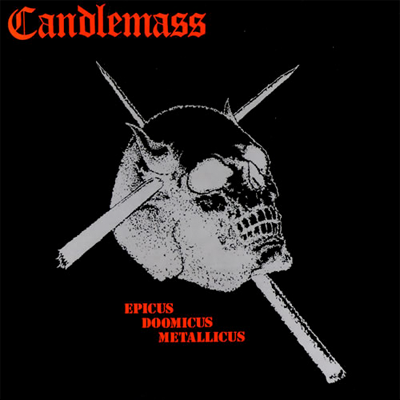
CANDLEMASS, Epicus Doomicus Metallicus  (1986, Black Dragon)

The skull:
One of the most iconic skull images in metal, the Candlemass skull needs no introduction, but what about it is so memorable? The horns and the spears. The horns are a diabolic touch; the drumstick-like spikes spearing the skull and forming a crucifix pattern are clearly awesome. Plus, the grainy black-and-white is perfect in its minimalism, and even has a bleakness about it. The gothic/Olde English logo font and Combat-style font for the album title…just everything. A perfect album cover, and one of the finest skull covers you will ever see.

The music:
Finally we have a skull cover that not only rules but has equally excellent music to match. This album is a mere six songs but totally complete in every way. Its atmosphere is morose and epic, the very best definition of “doom metal” possible. Interestingly, the session guys provide the most musically impressive performances: the leads of Klas Bergwall are soaring things that make the most of both aggression and melody, very much minor key and apparently taking influence from classic music, especially reminiscent of various religious hymns. His passages sound like they’re coming from the minds and hands of a church organist and not a mere rock guitarist. Bergwell is clearly a skilled player who never recorded on another metal album again (damn shame). Same story with vocalist Johan Längquist, who is not only magnificent in his pleading, desperate, booming delivery, and not only the best singer the band ever had, but actually turns in one of the most memorable performances on any metal album. Another damn shame that he would never sing on another Candlemass album. The whole thing has a creepy, medieval, ancient vibe. Leif Edling’s riffs and note sequences are amongst the most memorable in the genre — check the main riff of “Black Stone Wielder.” Awesome. What Edling lacks as a bassist he more than makes up for as a songwriter. Candlemass is only a live entity these days, no more studio recordings (so they say), and it’s just as well, because as good as successive albums might have been, they’ve never topped this one in terms of epic doom metal purity.
— Friar Wagner

SKULL132

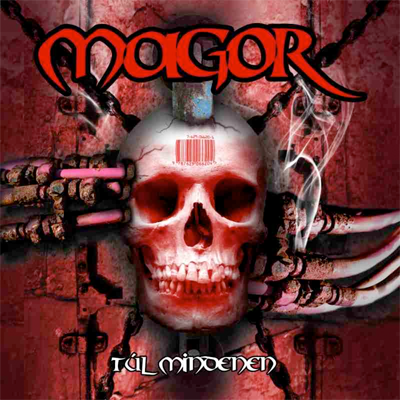
MAGOR, Túl Mindenen  (2008, demo)

The skull:
This poor skull! All manner of junk is going into his boney being, for a reason we will likely never know. Túl Mindenen means “beyond all” in Hungarian, and the torture this skull is enduring here is truly beyond all reasonability. Some big ol’ stubby cylindrical thing has been jammed into the top of his head while various tubes run in and out of both sides of the skull. He’s chained in four spots, like he’s gonna get drawn and quartered, and to add insult to injury his forehead’s been stamped with a barcode. Wisps of smoke or some gaseous stuff trails from the tubes on the right. He silently screams “I’m not an animal, I’m a…skull!!!” There’s just no dignity in what’s happening here.

The music:
Lately I’ve been real hard on newer bands here at BDS, but admit something: if you’re a modern band putting a skull on your cover and playing fifth-generation tough-guy metal, you have no reason to exist. Hungary’s Magor are another band that toss together one-dimensional riffs and terrible yelled vocals and call it metal. But they do have some distinctive elements that make them a bit more enjoyable than the bland norm. One thing Magor does is throw in sublime lead guitar lines and thematic passages, as heard near the end of this demo’s third and final song, “Rejts el Magadban.” More of that and less of almost everything else would be cool. I appreciate the tightness displayed in “Arccal a Feny Fele,” so credit drummer Zoltan Csatai on that, and the doom-ish element within “Túlélő Vagyok, Nem Aldozat” keeps things interesting, so that’s appreciated. Still, Magor will likely sound pointless to any seasoned metalhead. But if you just got turned onto Sepultura, Metallica and Pantera yesterday, and you live in Hungary, you’re gonna love this.
— Friar Wagner

SKULL130

VANEXA, 1979-1980  (2010, Jolly Roger Records)

The skull:
When you have an obscure band unearthing boring music from decades ago with a totally lame album title, what can you do but pair it with a simple skull cover? That’s what Vanexa did. Props to them for at least coming up with a skull that is uniquely their own, a bit more stylized than we normally see and certainly not trying to keep it real by depicting like a genuine human skull. The Vanexa skull (wonder if they called him Van? Van X-A?) hovers in the middle of a simple geometrical pattern of two squares and a circle. Cool, dude.

The music:
What are the chances I would get served two consecutive skull-laden albums compiling the early works of junky traditional heavy metal bands from Italy? This skull-digging is some dirty business sometimes. Vanexa have been around since 1979, and even though their last album, the fourth, came out in 1995, they’re apparently still together. You can see from the title that this album collects their earliest material in demo and live form. It’s mostly forgettable hard rock/heavy metal that’s typical of the day, in terms of style (ie. NWOBHM-sounding stuff) but lacking any noteworthy invention or vision. Horrible yelping vocals don’t help. Something like “Hiroshima” can be cited as proto-speed metal in the same way early Raven and Accept can, I suppose, but these guys ain’t Raven or Accept. Pass!

SKULL128

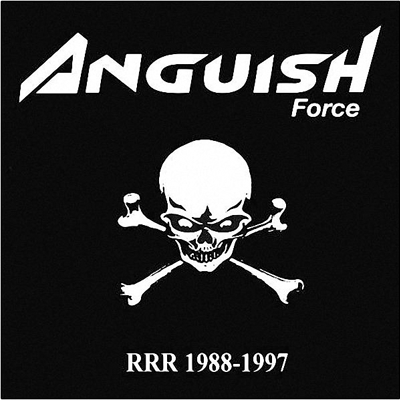
ANGUISH FORCE, RRR 1988-1997  (2009, My Graveyard Productions)

The skull:
I’ve said it before, I’ll say it again:  give us something we can use!!! This is about as basic as it gets, and we’ve seen it many times: white skull ‘n’ crossbones on a black background. But that’s the business we’re in here at BDS, and if it gets too fancy the Council gets cranky, so we’ll take it! Notable is the sinister grin and leering eyes looking downward at the clunky album title. This skull looks like he’s up to absolutely no good. Please note that if you’re going to use the word “Force” in your band name, it seems ridiculous to the outside world to have the word “force” in such a small font. Not very forceful.

The music:
I can only find evidence of this Italian band releasing material since 1998, and in those early days as Anguish (they added the tiny “Force” later). But if they’re telling us they’ve been around since 1988, I guess we have to believe them. The stuff all sounds very modern in production, so I’m guessing some of these songs were conceived by one of the guys back when we was 13 years old and they finally recorded them once they had a few official albums under their belt. No idea why this collection’s title is preceded by “RRR.” Nevertheless, there are 12 songs here, including Uriah Heep and Grave Digger covers (“Sympathy” and “Heavy Metal Breakdown,” respectively, although you could probably guess that Uriah Heep never wrote a song called “Heavy Metal Breakdown”). Their originals are pedestrian speed/power metal, in the vein of, but less than the German bands who popularized this approach — you can hear Helloween in here, and even a more obscure band like Attack. It’s okay, very well-played, just not conceived by visionaries or anything. As with many Italian metal bands, the vocals suffer due to a strong and not particularly attractive accent. And, yet again, we have an example of the album cover reflecting the band’s own musical laziness. With titles like “Fire From Hell,” “Death in Hell,” “Priest of War,” “The Witch of the Castle” and “Heroes of Metal,” you probably won’t be surprised to know that much of their material is interchangeable. Stock, stocky and stockiest riffs galore. You have to appreciate the longevity, though, whether they got their start in 1995 or way back in 1988. (You know, Voivod put out Dimension Hatross in 1988, which is apropos of nothing, I just wanted to write about a great band on this site for a second…)
— Friar Wagner


SKULL126

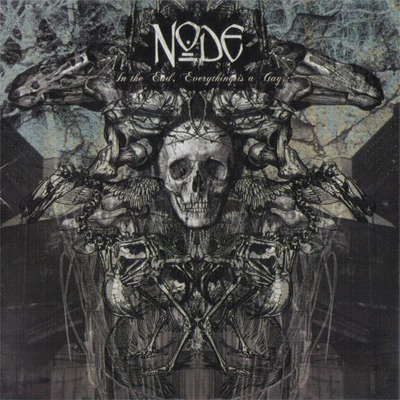
NODE, In the End Everything is a Gag  (2010, Scarlet)

The skull:
Got the whole Rorschach test artwork approach going on…kind of. You can spot tiny variations, but ultimately it’s yet another skull cover that plants a skull in the middle of the frame and chucks a mess of formless junk at it, plasters it around the skull and calls it good. Is it really good? I guess it’s better than many we see here at BDS HQ. We sure would like to see the skull a lot bigger though…any skull smaller usually gets stuffed into the Honorable Mentions closet and forgotten about. But man, look at all that junk! That skull ain’t gettin’ outta there any time soon. What it all has to do with the album title I have absolutely no idea…

The music:
For as long as this Italian band has been around, it sure seems like no one has cared very much. Constantly under the radar, their music is of a consistently high quality, in terms of performance, but do they deliver something special, something to treasure and revisit year after year? Not really. Albums and songs have their moments throughout their discography, but it never feels essential and never draws you back for repeated listens. This album, their fifth, is their least remarkable yet, ruined by vocals that are the epitome of modern metalcore screaming — interchangeable with the hundreds of other bands that sound like this. So fucking vanilla. Think Anselmo-meets-Lindberg…yep, that thing. Musically, nearly every song has a cool riff, an unexpected rhythmic shift, or a comes-out-of-nowhere spiraling melodic guitar line or theme (“Masks of Life”), but as a whole it’s forgettable stuff. The Billy Idol cover (“Rebel Yell”) is lame, although you gotta give them credit for trying. Ultimately, they’re heading down the metalcore road and that’s a mistake. They’re too experienced to be jumping on bandwagons, and they’ve chosen the worst bandwagon to jump on. Node? Nope.
— Friar Wagner

SKULL124

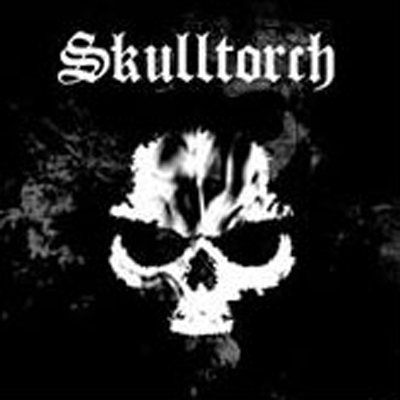
SKULLTORCH, demo (2007)

The skull:
It would seem this skull is floating in a forest in autumn, with leaves actively falling across his brow. And he looks pretty pissed off about the situation. Very simple black and white, with a totally generic logo at the top. The skull is not even mounted on top of a torch or anything. Maybe he’s on a quest for the torch, roaming through dense endless forests, and when he finds it in the castle the reunion will be glorious and many elves and dwarves will come together to celebrate the completeness of skulltorch and all will be joyous in the kingdom.But it’s probably just another ill-conceived album cover from a band that lacks a bit of vision.

The music:
This Belgian band haven’t followed up this utterly forgettable four-song demo yet, so we’re going on six years there. Not surprising, as they really had nothing important to say in the first place. It doesn’t get much more boring than this: Pantera-influenced groove metal punctuated with the kind of mid-paced death metal Unleashed were doing around the time of the Warrior album or what Gorefest started doing on False and Soul Survivor. But see, that makes Skulltorch sound almost good, and they’re not. While the drummer is clearly talented, the two-chord chug riffs and even some of the vocal patterns are not that far from nu-metal level inanity. I’ll take a pass and hope that someday one of these modern metal bands with a skull cover on their demo will be totally amazing.
— Friar Wagner


SKULL122

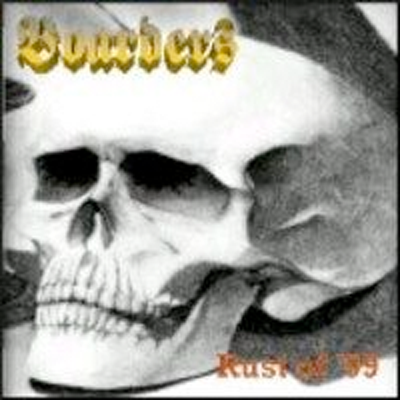
BOARDERS, Rust of 99  (1999, self-released)

The skull:
This poor thing. Bleached white and lonely, with an elongated cranium that’s getting into John Merrick territory. He looks sad and worried. But his teeth are in great shape. Another of those last-minute, totally uncreative skull covers that seems to have absolutely no purpose other than filling up space.

The music:
Boarders also doubles as a Megadeth tribute band and they probably do okay with that in their Italian homeland. Their original material is along the lines of Megadeth’s Countdown to Extinction and Youthanasia, the clean, streamlined stuff, but this covers EP shows a slightly rawer Boarders (are they skateboarders?). You get covers of Helloween, Megadeth, Metallica (a cool choice of “Escape”), AC/DC, Iron Maiden and Testament songs. Competently performed with no big surprises, although the vocals are uniformly terrible. Oh, and there’s a drum solo tacked onto the end. You’ll do without this one just fine.
— Friar Wagner

SKULL120

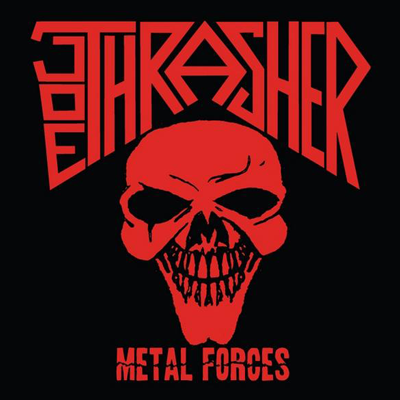
JOE THRASHER, Metal Forces  (2009, self-released)

The skull:
Love it. Just endearingly dumb, this silly skull grins madly under a dorky logo. The black and red simplicity makes it look like some NWOBHM 7 inch. Very much looks like the skull of famous DC comics villain the Joker, if he were to be de-fleshed…particularly the ’50s/’60s era one, if we’re being really nerdy.

The music:
Plus points for naming this album after the great UK metal magazine of yore. Onslaught had their “Metal Forces” song decades ago, but Joe Thrasher probably doesn’t know that, or maybe they just don’t care. What do we have here? We have a group of Canadians hellbent on playing the strictest interpretation of ’80s thrash possible. They’ve studied up on their countrymen, as lots of this album reminds of Canuck thrashers like Razor and Piledriver. The playing is fine, the riffing and solos are vice-tight, so it does the requisite thrash thing there. The vocals are a not-very-vicious snarl that’s like Vince Neil trying to do thrash, or Steve Souza trying to do Vince Neil. At just under 27 minutes, these nine songs blaze by without much to distinguish one from the other. They all thrash like hell, though every now and then they churn along in a mid-paced bore (“The March”). “The March” is worse than the worst Manowar (and I like Manowar, for the most part). The lyrics are dumb as fuck. This would have gone mostly unnoticed on an old label like Mean Machine or New Renaissance back in the day, so it sure as shit doesn’t measure up now.
— Friar Wagner

SKULL119

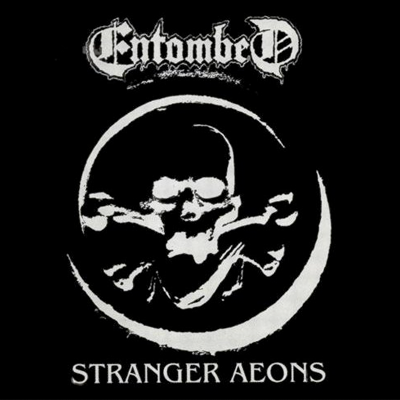
ENTOMBED, Stranger Aeons  (1992, Earache)

The skull:
Under one of the best metal logos of all-time, an encircled skull and crossbones sits humbly, demanding your attention. It’s simple and effective enough, the gray/black negative-image style treatment working well in conveying starkness and darkness. But I don’t know, it’s still kinda stock. This design was seen first on the band’s Clandestine album, featured on the cover of this EP, and also was spotted on the Wolverine Blues album. They also used it on a later self-titled collection, so they really tried to get as much mileage out of it as possible. Look real close and you’ll even see it on the Hollowman EP somewhere.

The music:
On the heels of the Clandestine album, this 3-song EP was released to keep it going…not that it was ever in danger of stopping. That album, and their first, remain at the top of all-time death metal album lists 20+ years later. So, the label pulled “Stranger Aeons” off Clandestine, and it’s a great choice. At a short-ish 3:26, the song finds the band’s signature ultra-fat guitar sound delivering killer riff after killer riff, not least of which is the main one: a lumbering, crushing, grooved monster that recalls Dark Angel’s “No One Answers.” Great riffs, great tones, great leads, and just okay vocals by Nicke Andersson. Speaking of whom, he and guitarist Uffe Cederlund snuck into the studio in late 1991 and recorded two songs that didn’t make the album, “Dusk” and “Shreds of Flesh,” and those are both here. These songs are even shorter than the main track, 2:42 and 2:04, and they’re good, but they suffer a little bit in sounding samey to what we’ve already heard from the band. No surprise that they changed direction after this, snipping off the fat a la Carcass’ Heartwork and changing direction in an effort to stay fresh. Fuck yeah, early ’90s Entombed! You can’t beat it.
— Friar Wagner

SKULL116

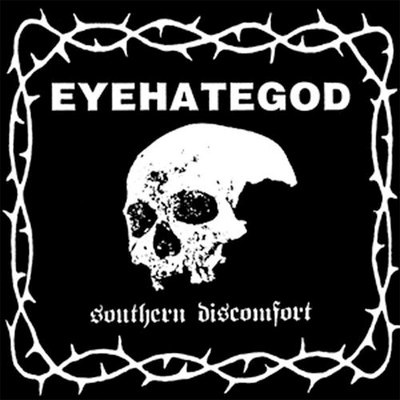
EYEHATEGOD, Southern Discomfort  (2000, Century Media)

The skull:
Surrounded in a square of thorns sits the Eyehategod non-logo and a skull looking bleakly off to the left. The smudge on its forehead is like some weird Ash Wednesday rite, and it’s a simple black and white. Nothing going on here, really…about as much thought went into the album cover as the music inside.

The music:
I liked Eyehategod for about two minutes in the early ’90s. Their take on doom was novel, and you know the take I’m talking about: rancid, crusty, bluesy, sick…but after you peel away the veneer of vomit and blood you face an endless procession of generic sound-alike riffs and bullshit vocals that just add insult to injury. And maybe that’s the whole idea. Depravity and emptiness. Southern Discomfort collects various stuff from between 1993 and 1996 — split tracks, single tracks, demos. Go for it if you just can’t get enough Buzzov*en or whatever. I’ll stick to Saint Vitus and continue to have a grudging respect for the unlikely legacy these guys have created over the years.
— Friar Wagner